
Product Family 07
Solar / Photovoltaic Cables
Photovoltaic DC cables for solar farms and rooftop installations.
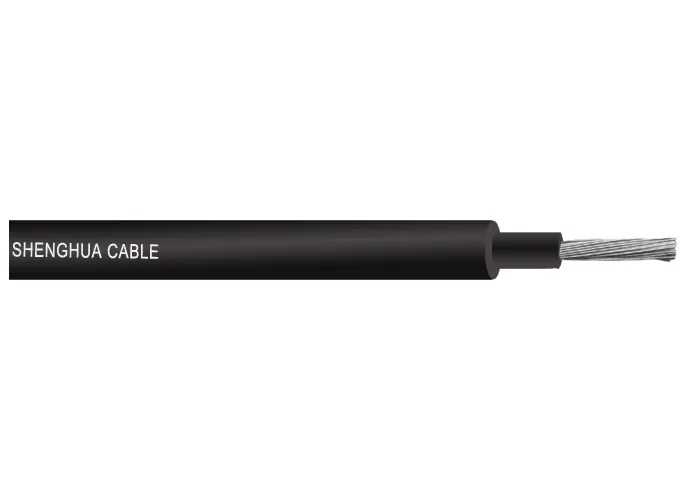
Family at a glance
- Family code
- 07
- Rated voltage
- To the project specification
- Constructions published
- Built to the enquiry
- Sizes covered
- To the cross-sections ordered
- Certificates
- 2 listed on this page
Scope
The rated voltage and the full technical parameters for this family are set by the system the cable is going into, and are confirmed against the enquiry. Send the system voltage, the standard you are working to and the quantity, and we will return the applicable construction and a data sheet.
This family covers the direct-current side of a photovoltaic installation: the string and array cabling between modules, the runs from array to combiner box, and the DC feeder to the inverter station. Cabling on the alternating-current side, from the inverter onward, belongs to the low voltage and medium voltage power cable families.
Photovoltaic cable is specified on the DC side of the system. Tell us the maximum DC system voltage — 1 000 V or 1 500 V for most string designs — the string current, the installation method (cable tray, conduit, free air or direct burial), the ambient and conductor temperatures the site reaches, and whether the project requires a halogen-free sheath.
A PV installation puts two unusual demands on a cable: continuous exposure to ultraviolet radiation and ozone, and a conductor that runs warm for most of the day because it carries current whenever the sun is up. Both are matters of the insulation and sheath compounds rather than the cross-section alone, so state the exposure conditions as well as the current.
Send the standard the project is working to. Where a specification calls for a particular national type, quote it and we will confirm the equivalent construction.
Key characteristics
- Photovoltaic cable works on the direct current side: string wiring between modules, array runs to the combiner box, and the DC feeder to the inverter.
- The compounds are the specification, not the cross-section. Continuous ultraviolet exposure and a conductor that carries current whenever the sun is up are what decide the service life.
- Supplied single-core for string wiring and twin-core for the parallel runs; halogen-free sheath compounds are supplied where the project requires them.
- Type-approved construction — the PV1-F we supply is listed by TÜV Rheinland; see the certifications listed on this page.
Size range at a glance
Cross-sections follow the string current and the permitted voltage drop on the DC run. Single-core builds carry the interconnections between modules and up to the combiner box; the larger sizes appear on the array feeder to the inverter. Send the array layout and we will size them with you.
Construction
Constructions in this family are quoted as engineered items rather than offered as a fixed list of catalogue models, so there is no selection table to publish here. Send the parameters asked for on this page and we will come back with the applicable construction, a data sheet and a price.
Product photographs
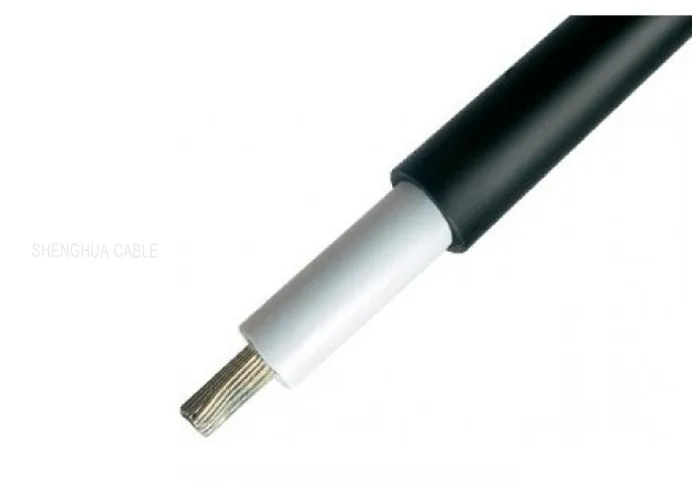
Photographs of builds from this family. Core count, armouring and sheath follow the specification of each order — the data sheet for your build is issued with the quotation.
Twin cores side by side under a flat black sheath.
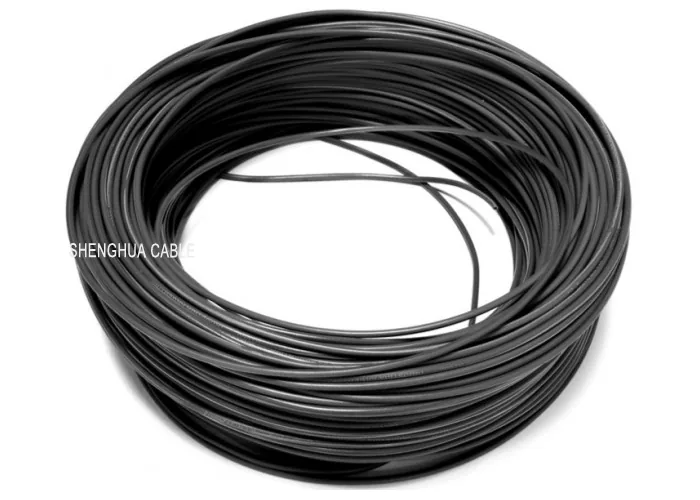
Supplied in coils — lengths cut to the array layout.
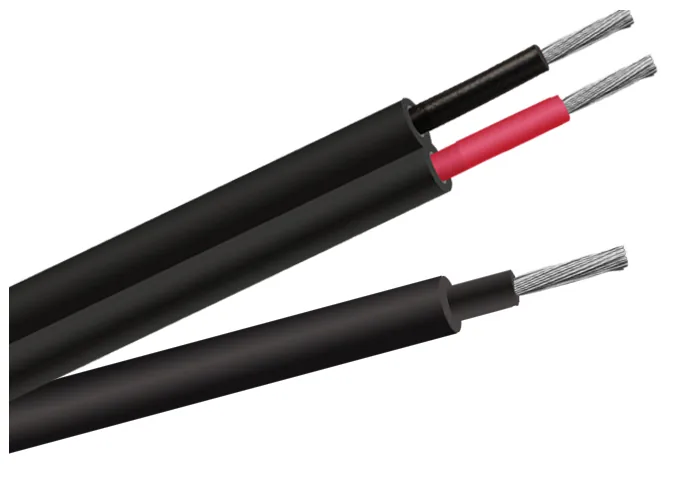
Single cores as normally run — one red, one black.
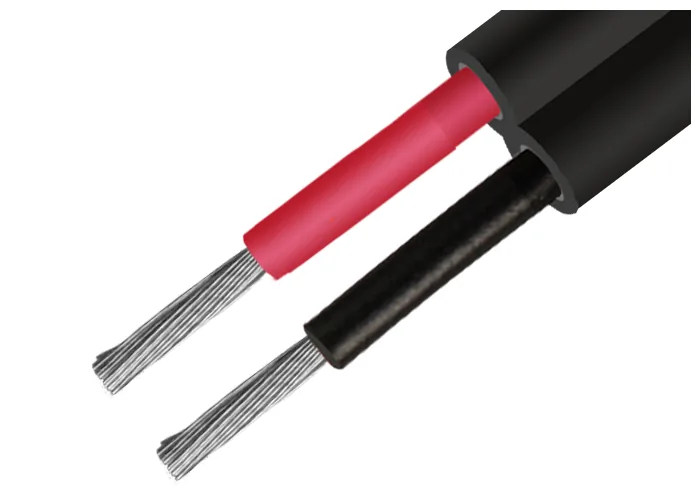
Flat twin with the red and black cores stripped at the ends.
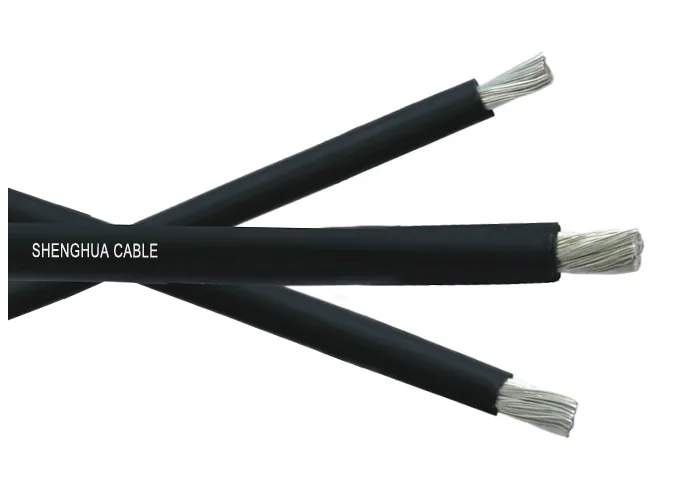
Single cores, stripped — cut to the run length.
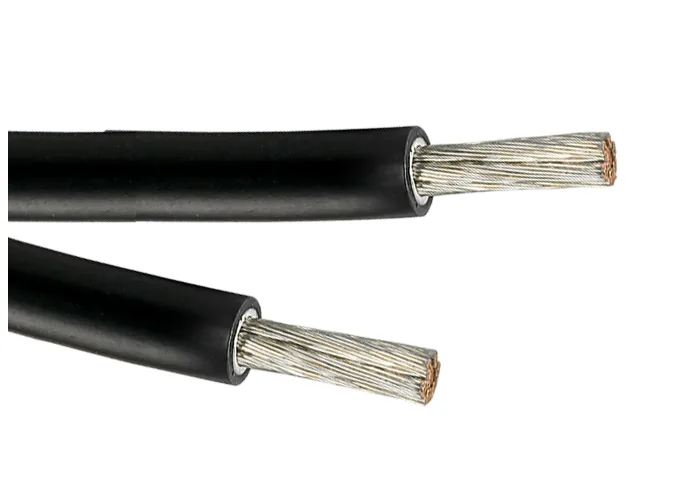
Stranded conductor at the stripped end.
Type designations by region
Buyers search for a supplier by the designation their own market uses. The codes listed against each construction above are the designations this family is ordered under in China; each is given for cross-reference only, and is published only where a supporting reference exists.
Europe
PV1-F EN 50618 / IEC 62930
European designation for the photovoltaic cable build.
Type designations are given for cross-reference, so a specification written to IEC, GB, EN, DIN VDE, BS or GOST finds the right construction. Each designation is defined by the standard named beside it. Construction, standard edition and approval route are confirmed against your specification before an order is placed.
To quote we need
Send what you have of the following — a partial enquiry still lets us start, and we will tell you which answers are missing.
- Maximum DC system voltage and string current
- Conductor cross-section, single-core or twin-core
- Installation method — tray, conduit, free air or direct burial
- Ambient temperature and exposure conditions on site
- Whether a halogen-free sheath is required, and the standard cited
- Quantity and drum lengths
Request a Quote
Need a quotation for Solar / Photovoltaic Cables?
Send the construction, the cross-section and the quantity, and tell us which standard you work to. Our export team replies with a technical and commercial proposal.